Africa’s Prosperity must go global: SMEs, Women, and Youth at the heart of AfCFTA.
Africa stands at a historic crossroads. SMEs account for more than 80% of employment, yet fewer than 20% engage in cross-border trade. Women lead nearly 30% of registered businesses but face systemic barriers. Youth, who make up 60% of our population, are innovating daily but struggle to scale. These figures are not just statistics; they are the untapped engines of Africa’s prosperity.
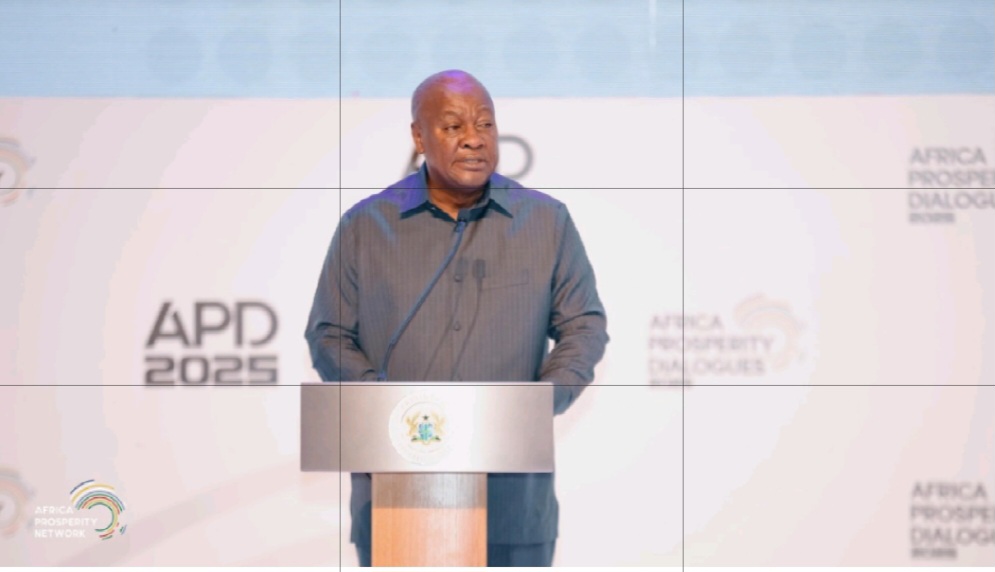
At the Africa Prosperity Dialogues (APD) in Accra last year, I reminded leaders that AfCFTA is not merely about free trade; it is about creating an environment that supports Africa’s industries and businesses. This year, as we convene APD 2026 under the theme “Empowering SMEs, Women & Youth in Africa’s Single Market: Innovate. Collaborate. Trade,” I reaffirm that Africa’s prosperity must not only be continental, it must be global.
SMEs are the backbone of Africa’s economy. According to UNECA, AfCFTA could increase intra-African trade by 52%. Ghana’s SMEs in agribusiness, textiles, and fintech have shown that when integrated into regional value chains, they create jobs at scale and drive industrialisation. But, the next step is global competitiveness. Our SMEs must not only trade across African borders, they must export to the world. AfCFTA must be the launchpad for Africa’s global brands.
Women entrepreneurs are Africa’s most resilient innovators, yet they remain locked out of finance and networks. Closing gender gaps could add trillions to global GDP, but this requires bold action. That is why I have consistently championed the creation of a Women’s Development Bank (WDB) in Ghana. This institution will provide low-interest loans, financial literacy, and tailored business support to women entrepreneurs. It is designed to dismantle systemic barriers, unlock economic potential, and empower women as leaders and nation-builders. Women’s economic empowerment is often framed as a social good, but it is fundamentally an economic strategy. For AfCFTA to deliver on its promise, inclusion, particularly of women, must be non-negotiable.
Africa’s youth are our greatest asset. With 60% of our population under 25, we hold the world’s largest youth dividend. In Ghana, I have made it clear that agriculture must be the engine that harnesses this energy. My vision is to move our agriculture sector from subsistence to a powerhouse, modernised, mechanised, and globally competitive sector. By investing in irrigation, storage, processing, and digital platforms, and by providing mentorship and capital, we will empower young farmers and agripreneurs to scale their enterprises. AfCFTA must be the ecosystem that allows Ghana’s agriculture to flourish across the continent and into global markets.
Critics often contend that Africa’s integration agenda is overly ambitious, citing infrastructure gaps and political complexities. These concerns are legitimate, but they are not insurmountable. Ghana’s role as host of the AfCFTA Secretariat in Accra demonstrates our unwavering commitment to continental integration. The Pan-African Payment and Settlement System (PAPSS) is already transforming cross-border trade by reducing currency barriers and transaction costs. The Single African Air Transport Market (SAATM) is lowering the cost of movement and strengthening connectivity. At the same time, digital platforms are enabling small and medium-sized enterprises to reach customers far beyond national borders. Integration succeeds not by chance, but by collective political will, sustained investment, and deliberate action and Africa is moving in that direction.
The strategic imperative before us is unmistakable: the AfCFTA must succeed; fully, inclusively, and competitively on the global stage. This demands deliberate action. Governments must align policies and dismantle the barriers that fragment our markets. Financial institutions must move beyond one-size-fits-all financing and design instruments that unlock capital for SMEs, women, and youth. Private investors must recognise Africa’s entrepreneurs not as risks to be avoided, but as partners in value, creation while civil society continues to hold us – leaders and institutions alike – accountable. Africa’s single market is more than an economic framework; it is a promise of shared prosperity. Yet that promise will remain unfulfilled unless SMEs, women, and young people are empowered not merely to participate, but to lead.
As President of Ghana, I call on African leaders, businesses, and citizens to move decisively from aspiration to action. We must innovate boldly, collaborate intentionally, and trade seamlessly across our borders. The AfCFTA must not remain a declaration agreed in conference halls; it must become a lived reality that expands opportunity for our African people. This is how we take Africa global; by building competitive brands, resilient industries, and world-class innovations that can stand confidently on the international stage.
Africa’s future will not be shaped by promises alone. It will be built by our entrepreneurs, powered by our women, and driven by our youth. The moment to act is not tomorrow. It is now.
This op-ed by H.E. John Dramani Mahama, President of the Republic Ghana, draws on extracts from his speeches and public addresses delivered at key platforms including the Africa Prosperity Dialogues 2025, engagements with young entrepreneurs, and policy statements on Africa’s industrialisation and women’s empowerment.
By H.E. John Dramani Mahama, President, Republic of Ghana