
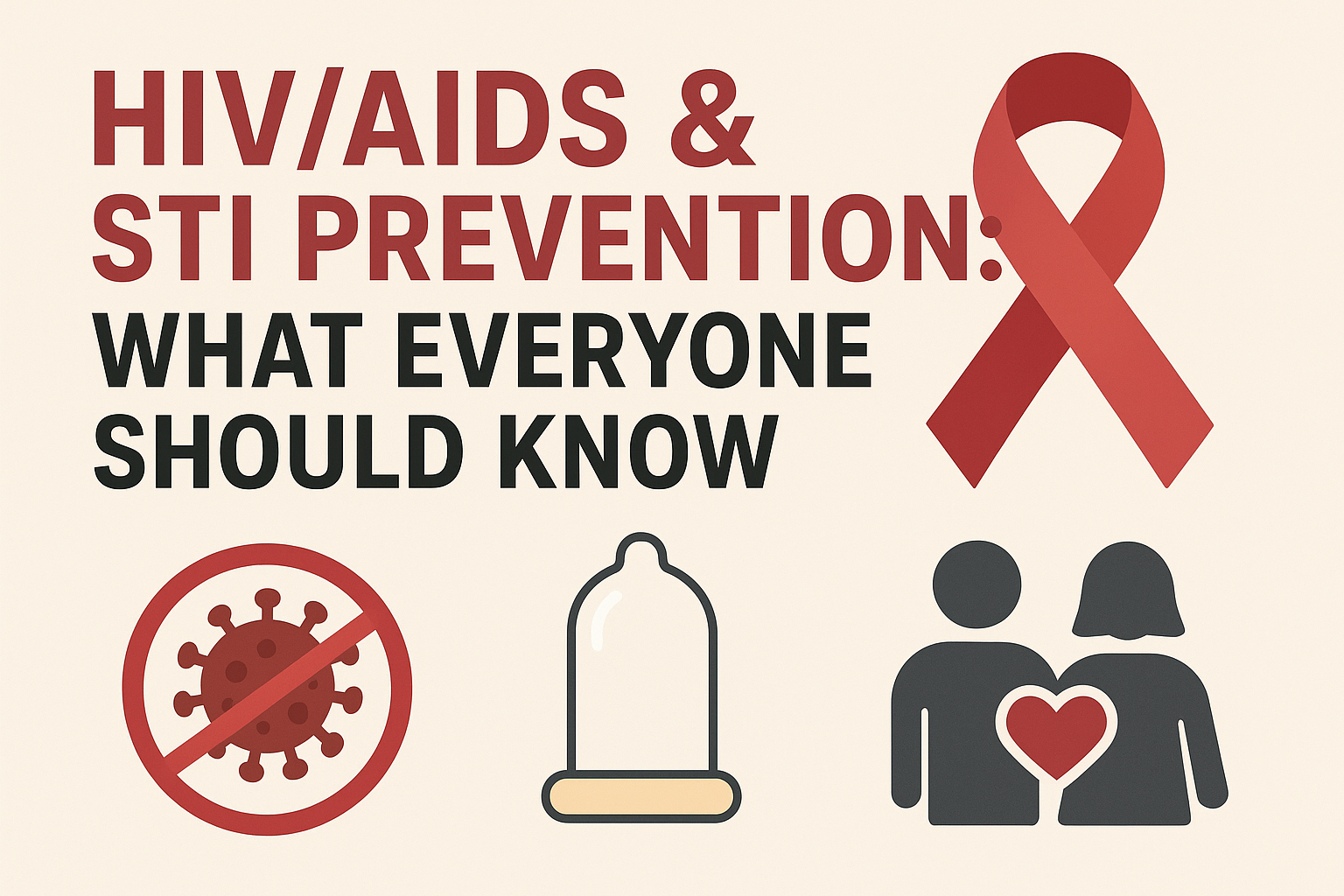
“Protecting Your Health: Essential Facts on HIV/AIDS and STI Prevention”
HIV/AIDS and other Sexually Transmitted Infections (STIs) continue to affect many young people and adults around the world. Understanding how these infections spread and how to prevent them is an important step in protecting your health and the health of your community.
HIV (Human Immunodeficiency Virus) is a virus that weakens the immune system, making it hard for the body to fight infections. If untreated, HIV can lead to AIDS (Acquired Immunodeficiency Syndrome), a condition where the immune system becomes severely damaged. Other STIs, such as gonorrhea, syphilis, chlamydia, and hepatitis, can also cause serious long-term health problems if not treated early.
The most common way HIV and STIs spread is through unprotected sexual contact, sharing needles, or from a mother to her baby during pregnancy, childbirth, or breastfeeding. However, the good news is that HIV and many STIs are preventable, and some are even treatable or curable if detected early.Prevention starts with making informed and responsible choices.
Abstaining from sexual activity is the most effective method, but if one chooses to be sexually active, consistent and correct condom use greatly reduces the risk of infection. Getting tested regularly is also very important, as many STIs do not show symptoms at the early stage. Early testing helps in receiving quick treatment, which protects both you and your partner.Open communication with partners about sexual health, testing history, and safe practices builds trust and reduces risk. Avoiding the sharing of needles or sharp objects also prevents transmission.
Pregnant women are encouraged to attend antenatal clinics where they can receive HIV testing and medication that helps protect the baby.Education, awareness, and stigma-free conversations are key to fighting HIV/AIDS and reducing STIs. When communities support each other by promoting safe practices, regular testing, and early treatment, everyone becomes safer and healthier.